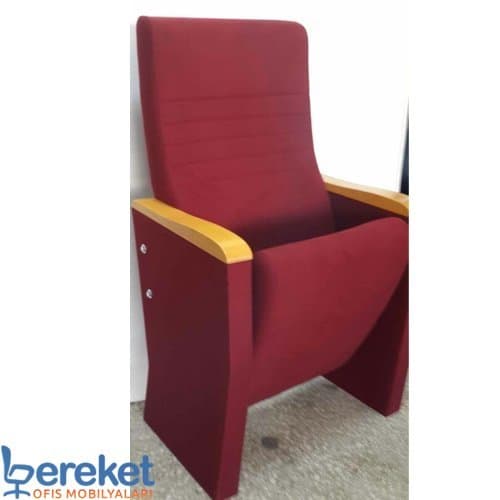
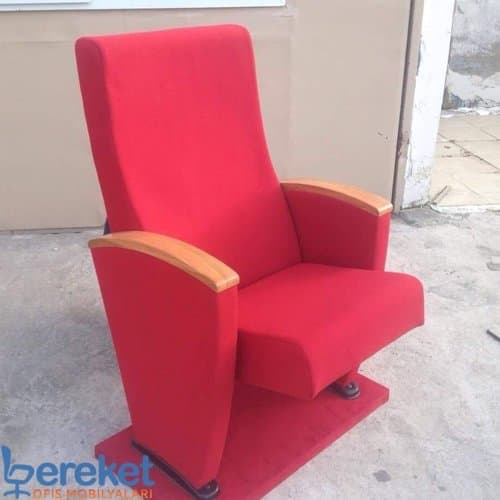
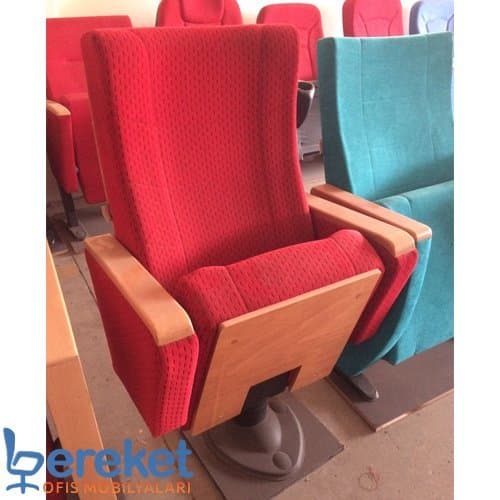
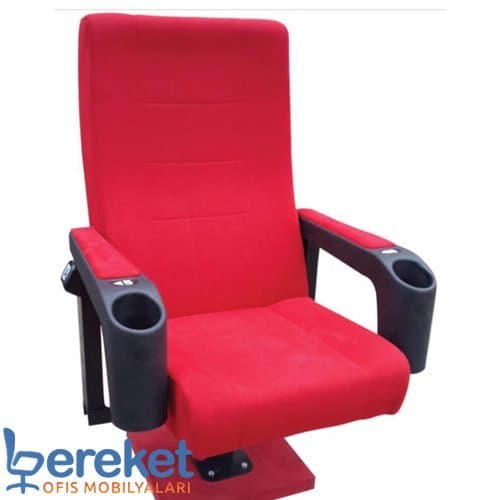
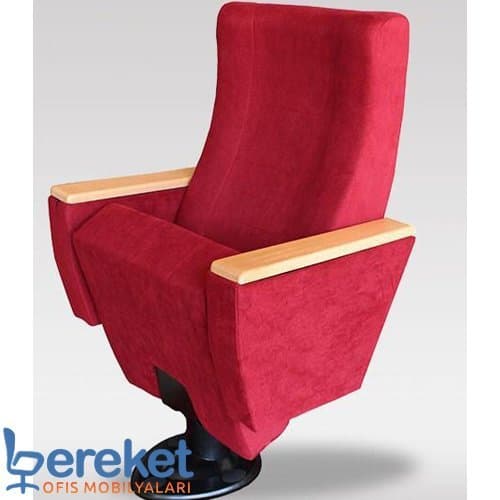
Theater seating manufactured to venue-specific dimensions and design, built to support acoustic performance — manufactured in Istanbul, Turkey.
In a theater, the audience's attention should stay on the stage, not on the seat under them. That's exactly why choosing theater seating isn't an ordinary furniture decision — it needs to hold someone comfortably, without them noticing it, through a two- or three-hour performance. As a manufacturer that builds this product line to venue-specific dimensions and design, we see clearly where venue owners hesitate most: should dimensions come first, or material, or budget? This page walks through how theater seat dimensions affect venue capacity, how the theater seating manufacturing process actually unfolds, and what really drives theater seating prices.
An audience member fidgeting mid-performance is focused on their own discomfort, not the stage. That's why backrest angle, seat depth and foam density in theater seating aren't picked arbitrarily — they're balanced to avoid back strain over a long sitting period. The venue's usage profile matters too: opera houses and classical theaters tend to run longer sessions, which pushes comfort criteria even higher up the list.
Fabric selection in theaters isn't purely a visual decision. Sound-absorbing fabric cuts down unwanted echo in the room, helping sound travel more clearly from the stage to the audience. This detail shows why, especially in acoustically sensitive venues, seat selection needs to be considered alongside the room's architecture, not separately from it.
Theater seat dimensions are directly tied to venue capacity and row layout. Narrower venues typically use more compact seat dimensions to preserve row spacing, while wider venues can accommodate larger, more comfortable models. Beyond standard sizes, venue-specific dimensions can also be produced, which optimizes both seat count and knee room per row at the same time. Row count and aisle width should always be assessed together before locking in dimensions.
Theater seating manufacturing works less like a standard production line and more like a venue-specific process. It starts with reviewing the venue's floor plan to lock in seat dimensions and row layout, followed by fabric type, color and foam density chosen to match the request. Meeting fire-rating fabric standards gets checked at every stage of the process, since it's a criterion that can't be skipped in crowded venues. Seats produced this way fit the venue's aesthetic precisely and hold up for years of use.
Theater seating prices are shaped by foam density, fabric quality and frame material. Two visually similar models can end up priced quite differently once their internal build differs. Even budget-friendly models can deliver solid quality without cutting the core structure — what matters is knowing exactly where the savings actually come from.
Ordering seating in bulk for an entire venue usually brings the per-seat cost down, since fabric cutting, production planning and installation all get organized for the whole venue at once. Custom dimensions and personalized design can push the price up somewhat, but that difference gets offset by the seat fitting the venue precisely.
Both types are built for extended sitting, but their priorities differ. Theater seating is shaped around the acoustic needs of live performance and the venue's overall aesthetic, while cinema seating usually prioritizes comfort in a darkened setting and sometimes extras like folding armrests. In theaters, a fabric's sound-absorbing quality gets weighed as a more critical factor, since stage sound clarity depends directly on that choice.
Theater seat dimensions get determined by evaluating row layout, aisle width and total capacity target together. Narrower venues favor compact dimensions, while wide, high-ceilinged venues can accommodate larger models. Standard sizes work for most projects, but when renovating an existing venue, requesting venue-specific dimensions is the most reliable way to optimize both seat count and comfort at once.
Folding models offer a real advantage in venues with narrow aisles and passage areas, since they ease audience movement and simplify cleaning. But in opera houses or classical theaters with very long sessions, fixed, more heavily cushioned models can sometimes be the better fit. The right call depends on session length and aisle width, which is why a model recommendation shouldn't be made without reviewing the venue's floor plan first.
Theater seating prices vary based on foam density, fabric fire rating and sound-absorption properties, frame material, and whether custom dimensions are requested. Standard-size, bulk-production projects bring the per-seat cost down, while personalized design and custom dimensions can raise it somewhat. When budgeting, factoring in how many years the seating will hold up — not just the upfront cost — tends to give a more accurate picture long-term.
Yes, beyond standard sizes, theater seating manufacturing can also produce dimensions that fit a venue precisely. This option gets chosen especially for renovating older venues or ones with architectural constraints, since a standard seat doesn't always fit an existing row layout. For custom-dimension requests, the venue gets measured on site and production is planned around those measurements, balancing seat count and audience comfort as efficiently as possible.
The right theater seating decision isn't about finding a single "best" model — it's about striking a balance that fits the venue's dimensions, acoustic needs and budget together. Treating dimensions, fabric and the manufacturing process as one connected decision, rather than separate choices, heads off mismatches and extra costs down the line.
Share your venue's dimensions and capacity details with us, and we'll work out the right model and manufacturing process together — we produce these seats ourselves in Istanbul, Turkey.